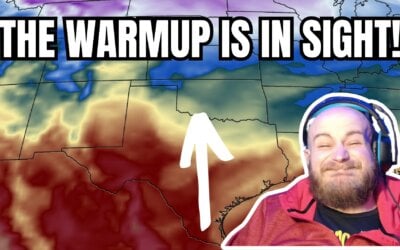
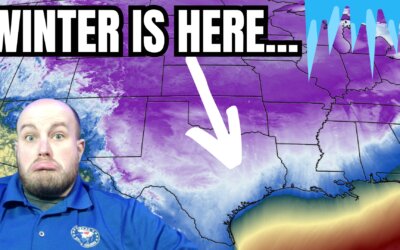
Let me start off by saying that there is no way we can talk absolute specifics about an event five days out. Due to the Tornado Outbreak on Friday, we’ve already had a lot of folks asking us about the potential event on Thursday/Friday. We’re still five days out from any potential severe weather event, so please keep that in mind and try not to get worked up. That said… lets dive in and look at what we might be dealing with in a few days.
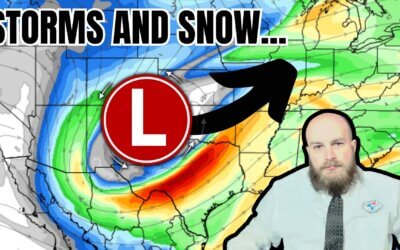
There have been quite a few folks that have said my discussions have become too long and detailed, so I’ll work on making them shorter. This graphic comes from the 6 AM Global Forecast System, which is one of several weather models. This image is for 12 PM on Thursday and shows winds at 18,500 feet above sea level. This is a simple way to look at incoming storm systems and to identify their strength. The GFS suggests the storm system would begin to affect much of the Southern Plains on Thursday, and then stalls it out and maintains its position for several days. I won’t go into those specific details right now, but I just wanted to briefly explain what we’re dealing with.
Like I said, there is no point in trying to get into specifics right now because we’re so far away. However, since so many folks are already asking about the severe weather potential, I’ll do a very vague briefing about it. Current data suggests we’ll have a southeasterly flow off the Gulf of Mexico, allowing for rich moisture to return ahead of the upcoming storm system. The 12Z (6 AM) GFS has dewpoint values above 60°F east of a dryline/cold front. Behind the dryline/cold front, severe weather potential would be minimal. Ahead of the cold front, instability values may become sufficient to support severe weather. Instability values are going to depend on how much cloud cover we have, what the air above the ground is like, is it raining already, etc. There are so many questions that have to be answered and we cannot answer those five days out. I’ll say this… There will probably be a threat of severe weather on Thursday ahead of the cold front. Where the cold front ends up, we don’t know yet (see the last bullet point in this discussion for more on that). This isn’t a setup where we can forecast a “Major Severe Weather Outbreak” five days out. It does not look like that kind of event right now. We cannot tell you how significant and exactly where the severe weather risks will be on Thursday. Current data suggests along/east of Interstate 35 on Thursday, but that WILL change as we get closer. Anyone who can tell you exactly how significant and where this event will happen are talking out their behinds. It’s not just Texas that could face this threat. Oklahoma, Arkansas, and Louisiana would also be included. Stay tuned, we’ll keep you updated.
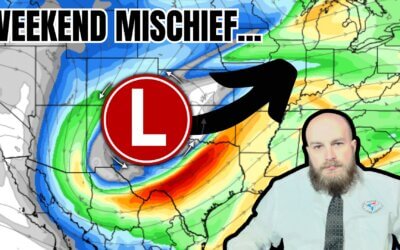
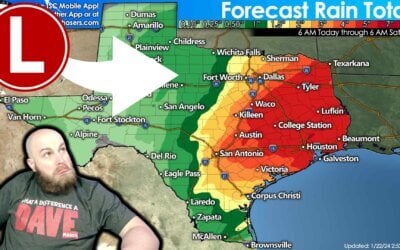
Something we are more confident about is the rain chances. As this upcoming system approaches the Midwest and Southern Plains later this week, it looks as if it will stall out or move very slowly for a few days. This would allow for copious amounts of rainfall across a large area, and perhaps a monster snow storm to our north. This is kind of system that can be a drought-buster, or at least help put some water in our lakes. Once again, the axis of the heaviest rainfall is uncertain, but I’m more confident in saying that there will be a ton of rain somewhere this upcoming week into next weekend. This graphic comes off the 12Z GFS. Now, I did say we have uncertainty. We’ve only been looking at one weather model, lets take a look at another.
This is a messy graphic, so take a minute to get used to it. Without going into a bunch of meteorological nerdism, this graphic shows the upper levels of the atmosphere at 6 AM on Friday. I simply want to show you the difference in two weather models. The green lines show the GFS’s interpretation, which is what model you’ve been seeing all these graphics from. The orange lines show the 12Z ECMWF, a model that generally has done better this winter with storm systems in the longer range. Notice that the orange lines are further west in the Southwest United States then the green lines, which are over Kansas. I could get into a whole discussion on how to read this graphic, and I may at some point down the road, but I just want to show you that we have disagreement between weather models. If the storm system were slower, areas further west would receive rainfall and potentially severe weather. If the GFS is right, you would likely see something along the lines of the graphics you’ve seen above. This is why I’m not going into specific details, because it could change substantially now and Thursday.
Should you pay attention to this upcoming storm system? Definitely! The Gulf of Mexico is wide opening, allowing for rich moisture to return inland. We could have a dynamic (strong) storm system moving in by the end of the week. This does have the makings of severe weather, but I cannot confidently tell you right now where the best chances will be. I focused a lot on Texas, but by no means will any threats be localized to Texas. Just look at that rainfall graphic above! If that were to play out, there would be a large flooding event across multiple states.
If there is only one thing you get out of this blog post, just know you need to pay attention for possible bad weather by the Thursday time-frame. We’re going to be posting a ton of updates to keep folks updated, and I will include areas that are NOT in Texas! I realize we have a lot of folks following us from the Midwest and Southeast US. Just because our name is Texas Storm Chasers does not mean we don’t care about folks outside of Texas.
Here’s a few snow photos that we’ve received from all over Texas and surrounding states. We’ve included the location and photographer with each photo. If you have any snow/winter photos and want to share them, send them to contact@texasstormchasers.com with a town name and location.
SPECIAL WEATHER STATEMENT NATIONAL WEATHER SERVICE FORT WORTH TX 314 PM CST SUN FEB 12 2012 TXZ091>095-100>107-115>123-129>135-141>148-156>162-174-175-130200- MONTAGUE-COOKE-GRAYSON-FANNIN-LAMAR-YOUNG-JACK-WISE-DENTON-COLLIN- HUNT-DELTA-HOPKINS-STEPHENS-PALO PINTO-PARKER-TARRANT-DALLAS- ROCKWALL-KAUFMAN-VAN ZANDT-RAINS-EASTLAND-ERATH-HOOD-SOMERVELL- JOHNSON-ELLIS-HENDERSON-COMANCHE-MILLS-HAMILTON-BOSQUE-HILL- NAVARRO-FREESTONE-ANDERSON-LAMPASAS-CORYELL-BELL-MCLENNAN-FALLS- LIMESTONE-LEON-MILAM-ROBERTSON- 314 PM CST SUN FEB 12 2012 ...WINTER WEATHER EXPECTED FOR NORTH TEXAS... A MIX OF SLEET AND SNOW IS EXPECTED TO OCCUR OVER MOST OF NORTH TEXAS THIS AFTERNOON INTO MONDAY MORNING. A WINTER WEATHER ADVISORY FOR ACCUMULATIONS OF ONE TO TWO INCHES HAS BEEN ISSUED FOR AREAS ALONG AND NORTHWEST OF A LINE FROM EASTLAND TO WEATHERFORD TO DENTON TO MCKINNEY TO PARIS. SOUTHEAST OF THIS ADVISORY AREA...THE REST OF NORTH TEXAS WILL SEE A MIX OF SLEET AND SNOW THIS AFTERNOON INTO THIS EVENING...BECOMING SLEET MIXED WITH RAIN NEAR MIDNIGHT AND THEN ALL RAIN BEFORE SUNRISE IN ALL AREAS EXCEPT THOSE NORTH OF INTERSTATE 30 AND EAST OF INTERSTATE 35. BY MID MORNING THOSE LAST AREAS WILL CHANGE TO RAIN AS WELL. ACCUMULATIONS NEAR THE WINTER ADVISORY AREA MAY REACH UP TO THREE TENTHS OF AN INCH...BUT WITH WARM GROUND TEMPERATURES THESE ACCUMULATIONS SHOULD ONLY AFFECT ELEVATED SURFACES SUCH AS BRIDGES AND OVERPASSES. EXERCISE CAUTION WHEN DRIVING...BECAUSE IT MAY BE HARD TO SEE ANY ICE ON ROADWAYS BEFORE REACHING IT. AS THE ATMOSPHERE CONTINUES TO WARM OVERNIGHT...PRECIPITATION WILL CHANGE TO RAIN AND THE WINTER WEATHER THREAT SHOULD END BY SUNRISE MONDAY WEST OF INTERSTATE 35 AND NORTH OF INTERSTATE 20...AND BY MID MORNING IN ALL AREAS. AS WITH ALL WINTER EVENTS...THE SITUATION HAS THE POTENTIAL TO CHANGE. IF ACCUMULATIONS ARE EXPECTED FARTHER SOUTH...THE ADVISORY MAY BE EXPANDED.
Check out this cool satellite image taken at 4:15 this afternoon of the snow cover in West Texas. Clouds cover the eastern part of Texas with a bit of fog located just west of Fort Worth. The white blotches showing up across West Texas is where snow cover remained this afternoon. In addition to being able to see it from space, temperatures remained much cooler across snow-covered regions.
The 0Z NAM is pretty bullish in regards to snowfall accumulation with this upcoming event. The NAM suggests a large area of 8+ inch snow amounts with locations just northeast of Big Spring and around to Snyder having 12 to 16 inches of snow. This is only output from one specific model, but it is concerning because some of the higher resolution model guidance is suggesting some pretty high snow accumulations. It’s likely if we do see extremely high snow accumulations (over 8 inches) it will be localized to an area that ends up being under a deformation/convective band, which simply put it is a area heavy snowfall ends up training over the same areas, giving a localized area extremely high snow accumulations. Trying to predict these heavier snow pockets is nearly impossible until the event has started.
These are the Winter Storm products as of 9:45 PM on January 8th. The only change with these from our 6 PM update is that the National Weather Service office in San Angelo has extended the Winter Storm Watch another row of counties east. This Winter Storm Watch now includes San Angelo and Abilene. A watch means that there is the potential for significant winter weather within the next 36 hours that could create dangerous travel conditions. For more information on the definition of each of these products, see our discussion from 6 PM. The Rain/Snow line should remain 70 miles west of Fort Worth, meaning D/FW and the Interstate 35 Corridor will only see rain with this system