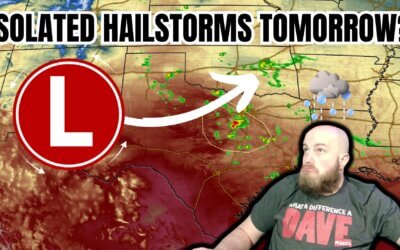
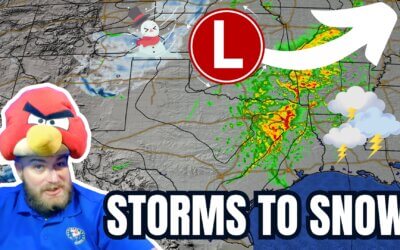
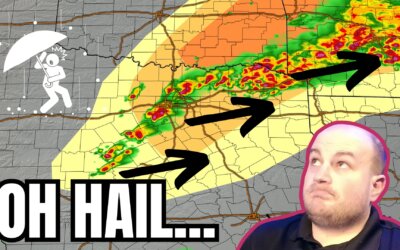
A relatively small severe thunderstorm watch has been issued for portions of the Texas Hill Country until 10 PM. Thunderstorms are beginning to develop in an environment with extreme instability values but relatively weak windshear. This means that significant severe weather, such as tornadoes, are unlikely, but some hail and damaging downbursts are possible. 
THE NWS STORM PREDICTION CENTER HAS ISSUED A
SEVERE THUNDERSTORM WATCH FOR PORTIONS OF
CENTRAL TEXAS
EFFECTIVE THIS SATURDAY AFTERNOON AND EVENING FROM 505 PM UNTIL
1000 PM CDT.
HAIL TO 2 INCHES IN DIAMETER...THUNDERSTORM WIND GUSTS TO 70
MPH...AND DANGEROUS LIGHTNING ARE POSSIBLE IN THESE AREAS.
REMEMBER...A SEVERE THUNDERSTORM WATCH MEANS CONDITIONS ARE FAVORABLE FOR SEVERE THUNDERSTORMS IN AND CLOSE TO THE WATCH AREA. PERSONS IN THESE AREAS SHOULD BE ON THE LOOKOUT FOR THREATENING WEATHER CONDITIONS AND LISTEN FOR LATER STATEMENTS AND POSSIBLE WARNINGS. SEVERE THUNDERSTORMS CAN AND OCCASIONALLY DO PRODUCE TORNADOES.
DISCUSSION...A CLUSTER OF THUNDERSTORMS IS EXPECTED TO DEVELOP NEAR AND JUST E OF A DIFFUSE DRYLINE IN CENTRAL TX. FLOW ALOFT IS RELATIVELY WEAK/ANTICYCLONIC...BUT SURFACE TEMPERATURES NEAR 100 F AND DEWPOINTS IN THE MID 60S ARE CONTRIBUTING TO STEEP LOW-LEVEL LAPSE RATES AND MLCAPE NEAR 4000 J/KG. THE WEAK VERTICAL SHEAR SUGGESTS THAT INDIVIDUAL STORMS WILL NOT BE LONG-LIVED...BUT THE STEEP LAPSE RATES/LARGE CAPE WILL SUPPORT A RISK OF BOTH STRONG UPDRAFTS WITH LARGE HAIL...AND STRONG DOWNDRAFTS WITH DAMAGING WIND POTENTIAL THROUGH LATE EVENING.
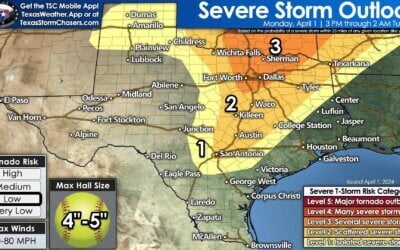
This graphic shows the chance of you experiencing severe weather within 25 miles of any given point today into tonight. The brown colors mean there is a relatively low chance of 5 percent and the yellow colors indicate what we refer to as the standard risk of severe weather, or a 15 percent chance. The Storm Prediction Center has placed the eastern portions of the Big Bend Country along with the western portions of the Hill Country in the standard risk of severe weather with the potential of isolated severe thunderstorms late this afternoon into the early evening hours.
This graphic shows the expected instability values at 7 PM this evening across Texas. The overall environment is expected to become very unstable along and east of the dryline this afternoon as Convective Available Potential Energy (CAPE) values excess 4,o00 joules per kilogram (J/Kg) in some locations. In non-nerdy terms, that’s very unstable! However, a strong cap will greatly limit the overall thunderstorm chances today. Only a few thunderstorms are expected in Texas today, but any thunderstorm that develops will likely become severe with large hail the primary threat. The storms should be confined to an area within 50 to 75 miles of the dryline, so they should remain well west of Interstate 35 as the cap will smash any storms that try to approach.
Much like Sunday, supercells are expected to develop over West Texas and further north into the Texas Panhandle during the late afternoon and evening hours. On Sunday, thunderstorms developed just east of the Texas/New Mexico border around 6:30 PM. Initially, there were only two storms west of Lubbock, both of which became prolific hail producers. After sunset, a number of storms developed further north as the low level jet helped increase warm air advection and the associated lift. The reason I mention this in detail is because those storms left boundaries all over the place. Later today those boundaries are going to act as focal points for new thunderstorms to develop.
Before I get even more nerdy, let me go ahead and outline today’s risk zones so folks who don’t care about weather too much can get on with their day. Above are several graphics showing the overall severe weather risk zones for today.
Brown Shaded Zones – 5% chance of severe weather within 25 miles of any given point (like your house/business). – Low Risk
Orange Shaded Zones – 15% chance of severe weather within 25 miles of any given point (like your house/business). – Standard Risk
Red Shaded Zones – 30% chance of severe weather within 25 miles of any given point (like your house/business). – Elevated Risk
The main severe weather threat at first will be very large, damaging hail. Across the elevated risk zones (red shading), there will also be a tornado threat and straight-line wind threat.
This graphic comes from the high resolution North American Model and shows projected instability values at 6 PM this afternoon. You can see the location of the dryline on this graphic, running along and east of Odessa to Lubbock and Amarillo line. You can see that the dryline bulges out between Amarillo and Lubbock. This feature is often helps increase forcing locally and develop thunderstorms to the east of that bulge. As a whole, instability values over 3,000 joules per kilgoram (J/Kg) support an organized severe weather threat, assuming that wind shear is in place.
This graphic comes from the same model for 6 PM Monday and shows Storm Relative Helicity. This algorithm helps meterologists determine the overall amount of spin available for storms. It looks like this one model has a warm front running along a Canyon, Childress, to Wichita Falls line. To the north of this warm front, wind shear values are over 300 m2/s2. Anything over 200 m2/s2 is favorable for organized thunderstorms, including supercells. To the south of this boundary, shear values are lower but still sufficant for slow moving supercell thunderstorms capable of producing big hail. The threat for tornadoes will be highest along any outflow boundaries left over from yesterday’s convection along with the warm front where shear increases. Additionally, some models are suggesting that a strong complex of storms may track along this warm front overnight. If that does materialize, not only will the threat of large hail continue but a considerable straight-line wind threat could also develop.
I would expect storms to begin developing by 5 PM in the Texas Panhandle and West Texas along the dryline with the possibility of quickly becoming severe. Remember that not everyone will see severe storms today, but refer to the outlook graphics above for the specific chances.
I’ll be chasing in Northwest Texas today and will have the live video feed running for what will end up being the last time on this specific website as our new site will be up sometime later this week.
Texas Storm Chasers’ David Reimer and Jenny Brown filmed multiple tornadoes from a cyclic supercell in extreme northern Oklahoma during the April 14, 2012 Tornado Outbreak that affected Oklahoma, Kansas, and Nebraska. This was one of the first tornadoes produced by the supercell that would go on to produce tornadoes in Southern Kansas and WIchita, Kansas. Be sure to check out the zoomed in shot as the tornado moved over the road with debris clearly visible! This is only a short portion of nearly an hour of tornado footage shot from multiple high definition cameras. All this footage will be included in the Texas Storm Chasers 2012 Storm Footage DVD.
This graphic shows the probability of severe weather occurring within 25 miles of any given location on Saturday. Let me first say ignore the scale on the bottom-right part of the image. The color-scale is not properly matched up for some reason. Let me first start off by saying that the highest severe weather risk will be in Oklahoma and Kansas, but a severe weather risk does extend south into Texas on Saturday. Generally speaking, the most significant severe weather risk will stay close to the Red River and from Vernon eastward to Henrietta. That could chance as new data comes in, so be sure to check back.
In terms of Oklahoma and Kansas, the Storm Prediction Center made history this morning by issuing the earliest issuance of a High Risk of Severe Weather in a convective outlook. Normally these high risks are issued within hours of the event, not an entire two days out. In fact, this is only the second time in recorded history that a high risk has been posted two days out and the first one was issued in the afternoon hours (this one was posted in the morning). Within the high risk zone, shown in the teal color, there is a 60 percent chance of severe weather occuring within 25 miles of any given location. Those are the highest probabilities issued in a severe weather outlook. Surrounding that high risk, there is a 45 percent chance of severe weather within 25 miles of any given point. As of the morning outlook, that risk extends from Wichita Falls, Texas northward into much of Oklahoma, Kansas, and into Southern Nebraska. Elevated (red color) and standard (yellow) severe weather probabilities surround those risks.
A significant outbreak of severe weather is expected on Saturday in Kansas and Oklahoma where atmospheric ingredients will be supportive of a tornado outbreak. Due to the expected instability and wind shear values, long-track, violent tornadoes will be possible with the strongest supercells. The Oklahoma City and Wichita Metropolitan Areas are included in this high risk of tornadoes on Saturday. It looks like it will end up being a busy day, with the highest severe weather chances actually occurring after sunset! While the severe weather risk is high, there’s no reason to be scared. Have a way to receive weather warnings and take the proper precautions if you come under a warning. Remember that even large tornadoes are small compared to the size of a county. See this page for severe weather safety tips.
We’ll be chasing Friday and Saturday and will have live streaming chase video running on our live video page. Stay tuned…